
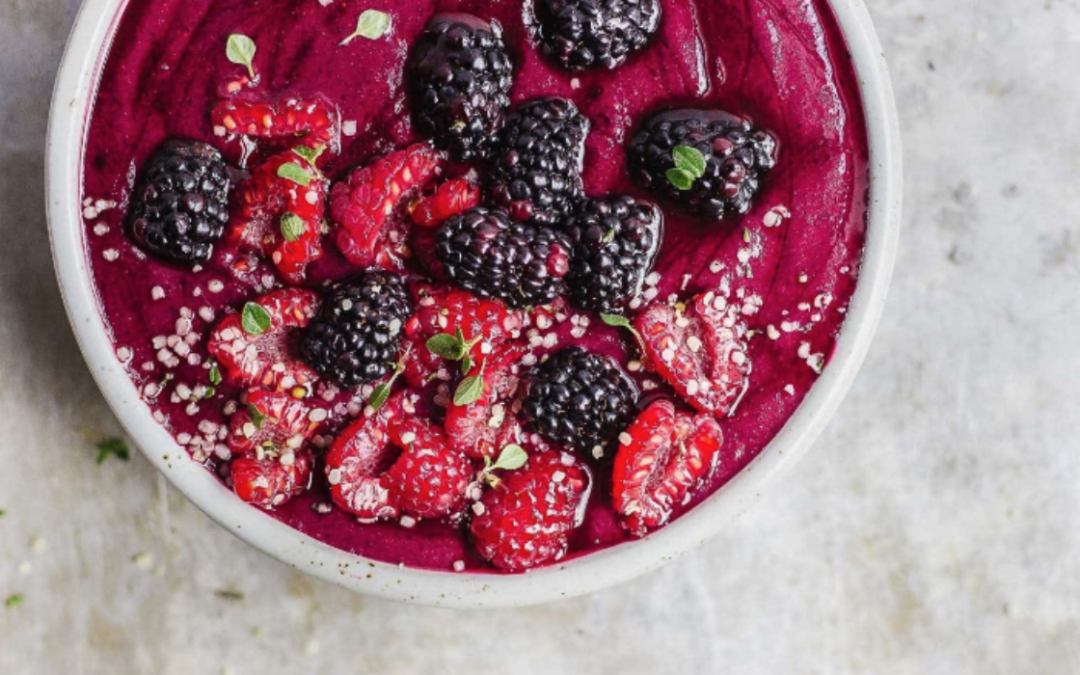
6 Top Tips to Optimise Your Smoothie Bowls
Are Smoothies and Smoothie Bowls Really That Healthy?
You’ve seen smoothies looking exotic and colourful on your Instagram feed and the front of health magazines, with their swirly patterns and perfectly placed toppings, but how healthy are these beautiful smoothies and breakfasts really?
Firstly, let’s get one thing straight. A smoothie bowl is simply a smoothie… in a bowl… with the addition of a few toppings. And just the same as smoothies, they have the capacity to be really healthy or just a sugar bomb with a few added nutrients. So much so that many of these bowls contain as much sugar, calories, and carbs as several glazed doughnuts. And that’s before you add the fun toppings!
There’s no denying that the smoothies and acai bowl craze has encouraged more people to take an interest in their health and nutrition, and smoothies are an enjoyable and quick way to make sure you’re getting plenty of fruit and vegetables in your diet. Particularly for people who have little time in their schedule to prepare meals, or need to be able to eat breakfast on the go.

The recommended daily intake of fruit and vegetables is now 10 portions. That’s 3 pieces of fruit (and not all at once) and 7 portions of vegetables. But this recommendation will still vary depending on the individual. If you are trying to lose weight for example, limiting your fruit intake further and to low-sugar varieties like berries is definitely a good idea. If you like to grab a bowl at one of the many smoothie and juice stands popping up nationwide, I wonder if you’ve ever thought about whether what is in it is actually good for you.
I did some research on some popular smoothie bowls and this is what I found. The Açaí Bowl at Crush contains 308 calories and 32 grams of sugar (that’s nearly the same as a can of coke), and the seemingly healthy Kinky Kale smoothie from Boost Juice Bars contains 318 calories and a whopping 70.2 g of sugar (nearly 3 times the WHO recommended daily amount for women!). And even though most of that sugar comes from fruit don’t be fooled, sugar is just sugar, natural or otherwise and in excess can lead to weight gain and health issues, especially when combined with a relative lack of protein, fat, and fibre to balance it out.
To ensure that the energy from any meal is released slowly, there needs to be a good balance of fats, carbs, and protein to encourage a steady breakdown of nutrients in the body. If your smoothie bowl lacks sufficient protein and fat, and they often do, it will hit your bloodstream like a bomb, making your blood sugar levels rapidly peak and then fall just as quickly leaving you feeling tired and hungry again. A steadier breakdown makes for a steadier mood, helping to avoid getting those cranky, shaky, and “hangry” feelings.

Another point to be mindful of when you blend your food is that by doing so you bypass the job of chewing. Along with making your meal last longer, chewing your food releases certain enzymes that spur on the digestive process, as well as send behavioural signals to inform your body that you are eating. These important signals help to curb overeating, keeping your portion control in check. When you blend your fruit and veg into a smoothie, you skip this process, which can lead to you feeling less satisfied and hungrier much sooner. A 2014 study in the Journal of the Academy of Nutrition and Dietetics showed that the more participants chewed, the less they ate. Blending foods also break down fibre, which in turn also decreases the satiety of food.
And lastly, don’t forget it’s all about balance and portion control. It’s easy to get carried away with size, especially when trying to make a big, beautiful-looking bowl and many smoothie bowls contain far more servings of fruit than you should eat in one sitting.
So how can you keep your smoothie bowl healthy?
It is of course still possible to create and enjoy a perfectly balanced, healthy, and nutritious smoothie bowl, and here are some tips on how:
Slow down
When eating your Instagram-worthy bowl of goodness, slow down to appreciate the ingredients and give your body time to register that you are eating. Chewing your smoothie, as strange as that sounds, is also a good way to get your enzymes flowing and hormones ready to signal when you are full.
Don’t skip the protein
Ensure that there is plenty of protein packed into your smoothie bowl to accompany the sugar, fat, and fibre. Pea or hemp protein powder is an awesome and simple way to do this.
Take it easy on the fruit
1 small portion of fruit is sufficient for a smoothie, don’t get carried away, and generally try to stick to a 2-to-1 veg-to-fruit ratio.
Choose unsweetened plant milk and water instead of fruit juice
By selecting unsweetened plant milk over fruit juice, you cut down on the sugar intake and add in extra minerals and protein.
Keep your toppings wholesome and sugar-free
Choose toppings such as hemp and chia seeds for heart-healthy omega-3 fatty acids, minerals, and protein, and coconut chips and cacao nibs add healthy fats and antioxidants as opposed to granola which is full of sugar.
Add good fats
Good fats in foods such as coconut yoghurt, avocado, coconut oil, or nut butter will help to keep your bowl balanced and leave you feeling fuller for longer.
Whether you are looking to lose weight, require support for certain health issues, or like so many, are trying to accomplish greater balance and well-being in your life, reach out to us and see how we can help you achieve your health goals.
Smoothie bowl recipes to try:

Chocolate, Ginger, and Pear smoothie bowl
This smoothie bowl is ideal for recovery from an injury or extended-duration workout. In addition to anti-inflammatory ginger, flax, and hemp contain alpha-linolenic acid, an omega 3 that also combats inflammation.
Ingredients
- 1 cup water
- 1 tablespoon ground flaxseed
- ½ tablespoon hemp seeds
- 2 tablespoons chopped fresh ginger
- ¼ cup unsweetened almond milk
- ½ ripe pear
- ½ avocado
- 1 cup spinach or two frozen cubes
- 25g Pulsin Chocolate Pea Protein
Directions:
Combine all ingredients in a blender and blend until smooth.

Blueberry Rooibos Smoothie Bowl
Green rooibos tea combined with blueberries supplies a potent dose of daily antioxidant support. The caffeine-free tea has a light, woody, slightly sweet flavour that’s accented by the fruit.
Ingredients:
- 2 cups green rooibos tea, steeped and chilled
- 1 ½ cups frozen blueberries
- 1 tablespoon ground flaxseed
- 1 tablespoon hemp seeds
- ½ small banana
- 1 cup spinach or two frozen cubes
- ½ avocado
Directions:
Combine all ingredients in a blender and blend until smooth.
For more yummy and healthy recipes visit our RECIPES page. For other tips on how to keep a healthy lifestyle try our GLOW page.


Recent Comments